Dystopian Novels That Will Make You Appreciate Your Ordinary Life
What if the life you’re living right now is the one someone else is desperately dreaming about? It’s easy to forget that when we’re scrolling through social media, comparing our lives to carefully curated snapshots of someone else’s world, someone else might be looking at our life thinking, if only I had that.
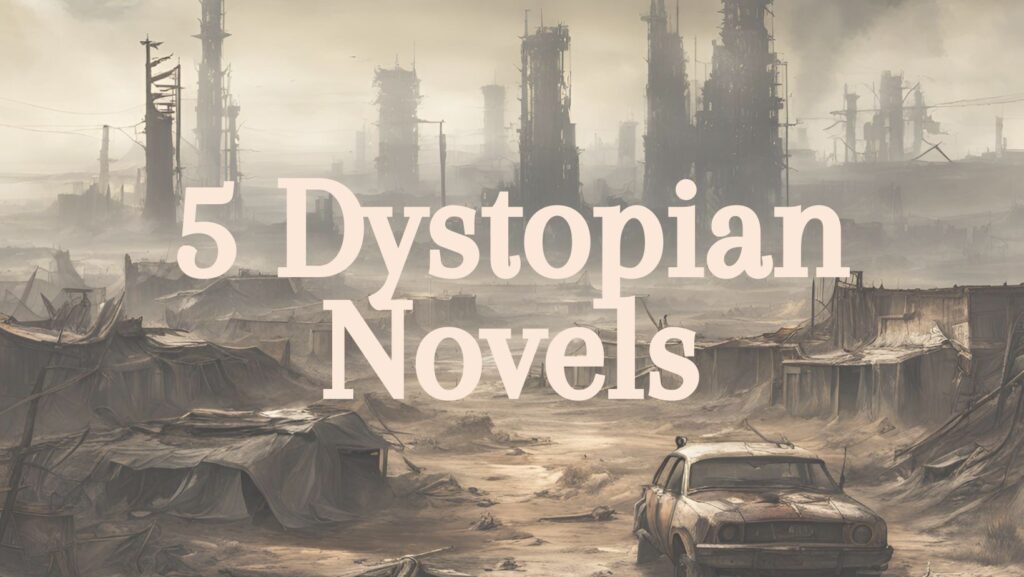
Today’s reading list invites us into stories where food, beauty, choice, and nourishment have been stripped away, controlled, or made scarce. These dystopian novels imagine worlds where the ordinary comforts we often overlook shared meals, seasons, art, safety, are no longer guaranteed.
But this isn’t meant to leave us feeling hopeless.
Instead, these books act as quiet reminders of what we already have. Each one is, in its own way, a love letter to the everyday life we’re living right now.
They all ask the same question:
What does it mean to be truly nourished?
1. Wild Dark Shore by Charlotte McConaughey
If you love plot-heavy thrillers, this might not be the book for you. But if you’re someone who enjoys a deeply sensory reading experience, where the setting feels alive, this novel is unforgettable.
Wild Dark Shore takes place on a remote sub-Antarctic island where a small family lives in isolation. One of them is a scientist tasked with protecting an incredibly important seed bank as rising seas threaten ecosystems across the world.
Their quiet existence changes when a mysterious woman washes ashore.
Who is she? Why is she there? And can she be trusted?
The tension in this story doesn’t come from constant action, but from atmosphere. The island itself becomes a character wild, cold, beautiful, and fragile. As the family navigates survival and trust, the story asks what we are willing to protect when the future feels uncertain.
2. The Light Pirate by Lily Brooks-Dalton
For anyone who lives along the coast, or especially in Florida, this novel can feel eerily close to home.
The Light Pirate imagines a future where catastrophic hurricanes hit the same regions again and again, slowly unraveling infrastructure and forcing communities to adapt to rising waters.
The story begins with one devastating storm that changes a family forever. Later, we follow their daughter, Wanda, as she grows up in a world where the landscape has transformed. Roads disappear. Electricity becomes rare. Boats replace cars.
Despite the harsh reality, there is also beauty here. The novel weaves in moments of magical realism and wonder, showing how humans adapt and continue living even as the world changes around them.
It’s both haunting and strangely hopeful.
3. The Wolves of Winter by Tyrell Johnson
This under-the-radar dystopian novel is perfect for readers who love survival stories and strong settings.
After a nuclear war leaves much of the world devastated, a small family retreats to the Yukon wilderness where the cold and isolation offer a chance at survival.
The story is told through the perspective of a fierce young woman determined to protect her family and their fragile way of life. But when a stranger arrives on their property, everything begins to shift.
Trust becomes dangerous. Survival becomes complicated.
If you enjoy stories like The Hunger Games, Station Eleven, or even the tone of the show Sweet Tooth, this one offers a similar blend of tension, resilience, and humanity.
(Note: this novel does include themes that may be difficult for some readers. Trigger warning for sexual assault)
4. Station Eleven by Emily St. John Mandel
This is one of those novels that feels almost poetic.
The story begins with a fast-moving pandemic that wipes out much of the world’s population. But instead of focusing only on collapse, Station Eleven explores what remains afterward, especially the human need for art, connection, and meaning.
A traveling theater troupe moves between small settlements performing Shakespeare and music, keeping culture alive in a world that has lost so much.
The message of the novel is beautifully simple:
Survival alone isn’t enough. People also need beauty, creativity, and shared stories.
It’s a reminder that nourishment goes far beyond food.
5. The Giver by Lois Lowry
Many readers first encounter The Giver when they’re younger, but revisiting it as an adult reveals just how powerful its message really is.
The story takes place in a society built on perfect sameness. Pain, memory, music, color, and emotional extremes have all been eliminated in the name of stability.
Food exists in abundance. Meals are distributed evenly and efficiently.
Yet something essential is missing.
No one feels joy, remembers beauty and no one experiences true nourishment.
Unlike the other novels on this list, this world isn’t defined by scarcity. It’s defined by abundance without meaning.
And that question feels particularly relevant today:
How nourished are we, really, in a world where we technically have enough?
A Small Step Toward Preparedness
Reading these dystopian novels led me to think about something I had never seriously considered before:
What would I do if the food I rely on suddenly disappeared?
Not from a place of fear, but from curiosity and practicality.
Living in a hurricane-prone area, my husband and I finally decided to purchase a small emergency food kit. It contains about a week’s worth of shelf-stable meals, things like rice dishes, soups, oatmeal, and simple comfort foods designed to last up to 25 years in storage.
It’s not meant for a massive disaster scenario. It’s simply a practical way to feel a little more prepared if something unexpected happens.
We also keep a few basics on hand:
- canned beans
- tuna packets
- canned fruits and vegetables
- pantry staples we rotate through regularly
One easy trick is taking advantage of grocery store sales—like buy-one-get-one offers—and slowly building a small reserve of shelf-stable foods you already eat.
Preparedness doesn’t have to be extreme. Sometimes it’s just thoughtful planning.
A Tiny Source of Fresh Nourishment
One other thing worth mentioning is something many people don’t think about in emergency planning: fresh greens.
There’s a company called Hamama that sells seed quilts designed for growing microgreens. You simply place the quilt in a tray, add water, and within days you have nutrient-dense greens.
They’re great for everyday use, topping soups, sandwiches, or salads, but they can also provide a fresh source of nourishment in situations where fresh produce might not be available.
It’s a small, simple way to reconnect with the idea of growing even a tiny portion of your own food.
The Real Message of These Stories
Each of these dystopian novels shows a world where nourishment has been altered in some way whether physically, emotionally, creatively, or socially.
And each one quietly asks the same thing of us:
Not to feel guilty.
Not to feel afraid.
But simply to pause and notice.
The meals we rush through.
The beauty we walk past.
The people we keep meaning to call.
The life we’re postponing until the conditions feel perfect.
True nourishment isn’t just about what we eat.
It’s about how fully we allow ourselves to receive the life we already have.
So this week, consider asking yourself a gentle question:
Where in your life could you slow down enough to truly taste it?
It might be a meal.
A conversation.
A walk outside.
A quiet moment with a book.